English
 English


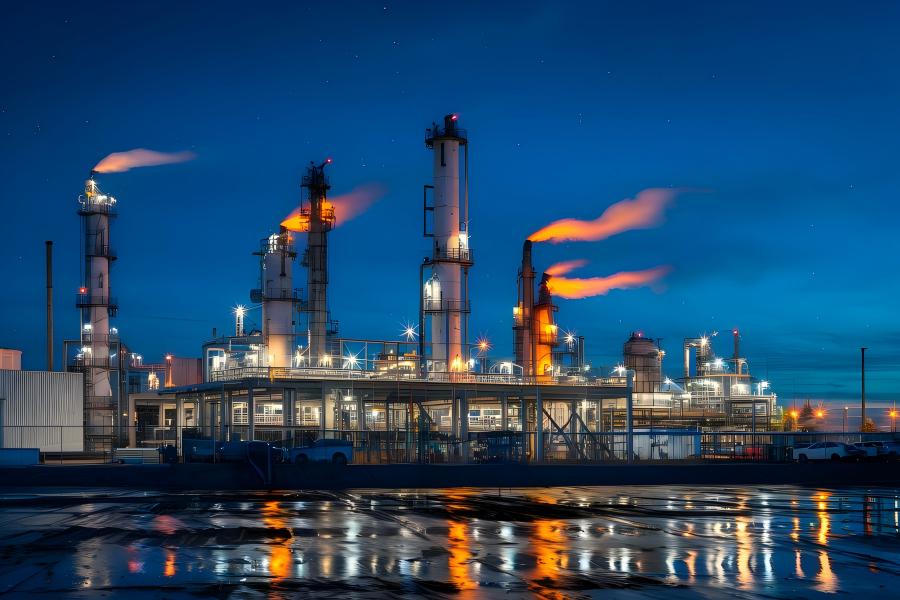
The petrochemical industry operates under some of the most demanding conditions found in industrial engineering: high temperatures, high pressures, strongly corrosive media, and abrasive solid-bearing fluids. The service life and reliability of equipment components often determine the safety and profitability of an entire plant. While conventional metals and organic materials perform well in many scenarios, they frequently fail prematurely under high-temperature oxidation, acidic or alkaline corrosion, and erosive wear from solid particles. Advanced ceramics — thanks to their outstanding heat resistance, corrosion resistance, high hardness, wear resistance, and electrical insulation — are increasingly becoming indispensable functional and structural materials for critical petrochemical equipment.
1. High-Temperature and Corrosion Resistance: Ceramics in High-Temperature Reaction Units
Petrochemical processes such as steam cracking, fluid catalytic cracking (FCC), and hydrotreating operate continuously at 500–1000 °C or higher, often in media containing sulfides, chlorides, and acids. Advanced ceramics such as alumina (Al₂O₃), zirconia (ZrO₂), silicon carbide (SiC), and silicon nitride (Si₃N₄) possess melting points and thermal stability far superior to those of common metals. Their strong chemical inertness means they do not readily react with sulfur-, chlorine- or acid-bearing species, significantly extending the service life of critical components.
Typical applications include:
• Linings and refractory burner parts in cracking furnaces, leveraging silicon carbide's high thermal conductivity and thermal-shock resistance;
• High-temperature thermocouple protection tubes and sensor sheaths made of corundum (alumina) or silicon nitride, combining thermal conductivity with resistance to medium attack;
• Catalyst support balls and inert filler balls in hydrotreating and reforming units, made of high-purity alumina ceramic to withstand high temperatures without introducing metal impurities that could poison catalysts.
2. Wear and Erosion Resistance: Handling Solid-Laden and Abrasive Media
Many petrochemical processes involve fluids carrying solid particles — for example, catalyst transfer in FCC units, slurry systems, and residue processing. High-velocity, high-pressure solid-bearing streams cause severe abrasive erosion of pipes, pump casings, and valves, where metal parts often fail through wear. The high hardness of advanced ceramics (silicon carbide and zirconia reach hardness values near or above 9 on the Mohs scale) makes them ideal anti-wear materials.
Typical applications include:
• Ceramic-lined pipes, elbows, and tees for conveying solid-laden fluids, lined with alumina or silicon carbide to dramatically extend wear life;
• Ceramic-lined pump casings and impellers used in abrasive slurry pumps and catalyst circulation pumps;
• High-pressure-drop throttling components (such as valve trims and restriction orifices) made of silicon carbide or zirconia to resist erosion and cavitation.
3. Sealing and Moving Parts: Mechanical Seals, Valves, and Bearings
Sealing reliability is critical in petrochemical plants; a seal failure can cause leakage, unscheduled shutdowns, or even safety incidents. Silicon carbide, zirconia, and silicon nitride ceramics — with their high hardness, low friction coefficients, and excellent chemical stability — have become the materials of choice for mechanical seal faces, pump sleeves, and high-temperature valve sealing pairs.
Typical applications include:
• Rotating and stationary rings in mechanical seals, commonly paired as silicon carbide–silicon carbide, silicon carbide–graphite, or zirconia couples, suited for oil and chemical transfer pumps;
• Ceramic valve cores, seats, and balls (e.g., alumina/zirconia ceramic ball valves) for high-temperature and corrosive media;
• Ceramic sliding bearings and bushings in special-duty rotating equipment operating oil-free or in highly corrosive environments.
4. Filtration and Separation: Porous Ceramics in Process Streams
Porous advanced ceramics (e.g., porous alumina, silicon carbide, and cordierite) feature high porosity, controllable pore size, and excellent resistance to heat and corrosion. They are widely used for gas–solid and liquid–solid filtration and separation in petrochemical processes.
Typical applications include:
• High-temperature gas dedusting with ceramic filter tubes and candle filters (e.g., FCC flue gas and gasification syngas cleaning), allowing direct hot filtration without cooling the stream;
• Catalyst recovery and mother-liquor filtration using ceramic membranes, improving separation efficiency and product purity;
• Porous ceramic filter cartridges for oil–water separation and fine filtration of process liquids.
5. Electrical Insulation and Electrical Safety: Ceramic Insulating Components
The excellent electrical insulation of advanced ceramics makes them valuable in the electrical systems and electric heating equipment of petrochemical plants. Alumina and aluminum nitride combine high thermal conductivity with electrical insulation, making them ideal insulating-but-thermally-conductive materials.
Typical applications include:
• Ceramic insulators and terminal blocks in electric heaters and heat-tracing systems;
• Protection and insulating sleeves for high-temperature electrodes;
• Ceramic insulating components in variable-frequency drives and high-voltage electrical equipment.
6. Catalyst Supports and Functional Materials
Advanced ceramics with high surface area and porous structures are widely used as catalyst supports. Alumina and cordierite honeycomb ceramic carriers are applied in reforming, hydrogenation, and tail-gas treatment, providing stable surface area and good thermal stability for active catalytic species.
Industry Value and Outlook
The application of advanced ceramics in petrochemicals delivers substantial benefits: extended maintenance intervals, reduced unplanned shutdowns, lower energy and material losses, and enhanced intrinsic safety of process units. With the trends toward refining–chemical integration, green chemistry, and equipment scale-up — along with growing demand for high-temperature, corrosion-resistant, and wear-resistant materials — the penetration of advanced ceramics in the petrochemical sector is expected to rise further. At the same time, the brittleness and high machining cost of ceramics remain challenges, which are being progressively addressed through composite design (e.g., toughened ceramics) and ceramic–metal hybrid components.
Conclusion
In summary, advanced ceramics — with their combined heat resistance, corrosion resistance, wear resistance, and electrical insulation — play an irreplaceable role in the combustion, conveying, sealing, filtration, electrical, and catalytic stages of petrochemical operations. They are becoming a key material pillar ensuring the long-cycle, safe, and efficient operation of petrochemical plants.