English
 English



The hardware ecosystem of artificial intelligence covers AI servers, GPU accelerator cards, high-speed optical transceivers, computing switches, edge computing terminals, robots and multi-sensor arrays. These devices are characterized by extreme power density, heavy heat generation, high-frequency signal transmission, high voltage and continuous operation. They demand materials with balanced thermal conductivity, electrical insulation, dimensional stability, low dielectric loss, high cleanliness and vibration resistance. Advanced ceramics such as alumina, aluminum nitride, silicon carbide and zirconia deliver superior thermal conduction, reliable insulation, low thermal expansion and low signal loss. They have become foundational components for AI computing hardware, optical communication modules and humanoid robot assemblies, supporting the evolution of AI infrastructure toward higher density, higher reliability and lower latency.
1. Thermally Conductive Insulating Substrates for AI Compute Chips
GPUs, ASICs and FPGAs deployed in AI servers generate tremendous heat under full workload. Poor thermal management easily causes frequency throttling, system crash or permanent hardware damage. Aluminum nitride (AlN) ceramic substrates are the preferred carrier for high-end computing modules, combining electrical isolation with efficient heat dissipation. High-purity alumina substrates are widely adopted for mid-range accelerator cards and edge computing units. Dense and thermally stable ceramic substrates are compatible with eutectic soldering and thick-film circuits. Compared with traditional PCB materials, they support far higher power density and keep compute chips stable under long-duration heavy load, serving as a core part of both air-cooled and liquid-cooled thermal solutions.
2. Components for High-Speed Optical Modules
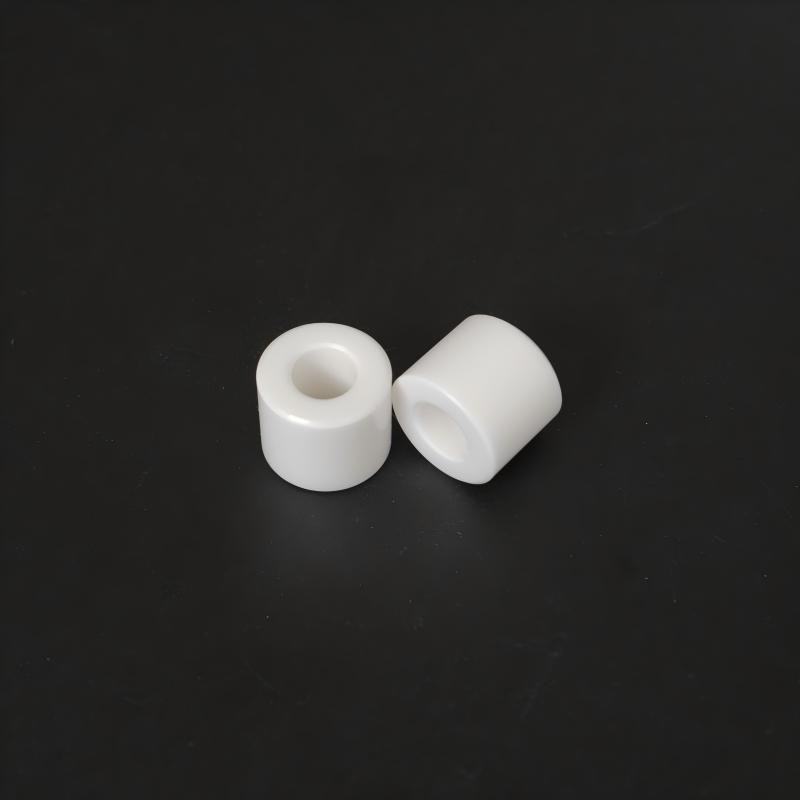
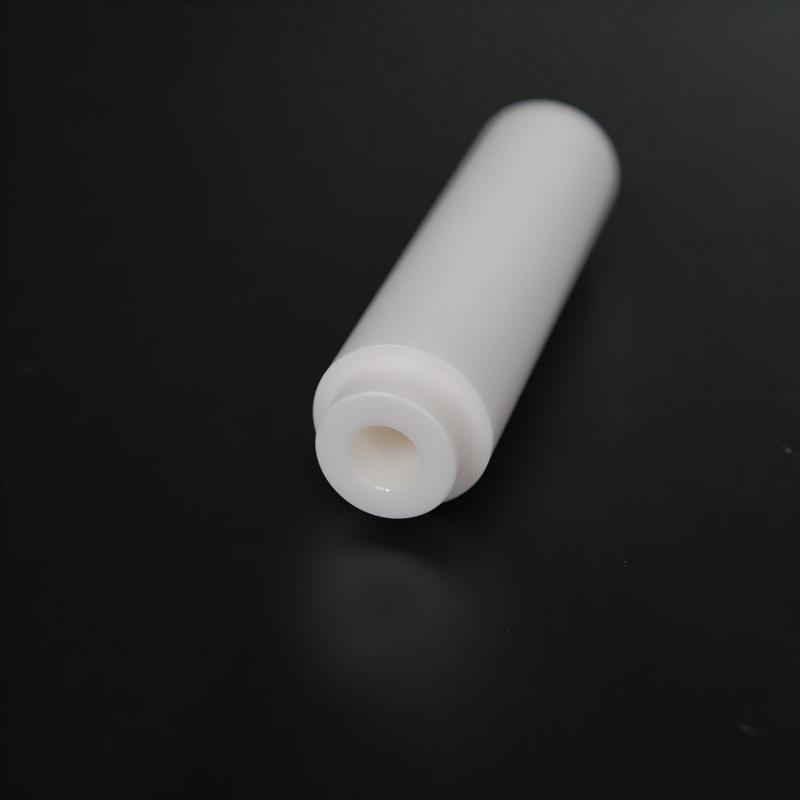
Large language model training requires massive data exchange, and AI data centers rely on 400G, 800G and 1.6T optical transceivers for inter-server and inter-rack communication. Advanced ceramics are commonly made into optical ferrules, alignment sleeves, TOSA/ROSA bases and isolator substrates inside optical modules. Alumina ceramics feature ultra-precise dimensions and matched thermal expansion coefficients with optical elements. When ambient temperature fluctuates inside data halls, the fiber coupling position remains stable, reducing optical insertion loss. Ceramics are non-outgassing and non-hygroscopic, protecting optical surfaces from contamination under non-stop 24/7 operation.
3. Parts for AI Humanoid and Collaborative Robots
Zirconia and silicon nitride ceramics are widely used in reducers, bearings, plungers and friction pairs of joints for humanoid robots and AI collaborative robots. Ceramic materials have lower density, low friction coefficient and inherent self-lubrication. They reduce wear debris from frequent reciprocating rotation and extend maintenance intervals. Ceramic insulators and terminal blocks isolate high-voltage drive circuits inside servo motors. Ceramic locating pins and guides maintain repeat positioning accuracy for vision-based picking and precision assembly. In addition, their non-magnetic property prevents signal interference with magnetic encoders and attitude sensors.
4. Supporting Parts for AI Sensors and Machine Vision
LiDAR, millimeter-wave radar and vision sensors form the perception layer of AI systems. Alumina and transparent ceramics are processed into optical windows, filter mounts and hermetic packages for LiDAR. Ceramic bases have minimal thermal drift, ensuring stable ranging and imaging signals even with temperature variation. MEMS and piezoelectric sensors adopt ceramics as substrates and packaging shells to block moisture and dust. These robust sensing units power AI for autonomous driving, security vision and industrial visual inspection.
5. High-Frequency Circuit and ESD Protection Components
AI switches and high-speed RF boards require strict signal integrity. High-purity alumina ceramics are used for high-frequency capacitors, resonators, RF filters and ESD protection components. They show low dielectric loss at high frequencies and suppress crosstalk and signal attenuation. Excellent insulation helps avoid electrostatic breakdown and protects high-speed chips. Ceramic spacers and support posts inside computing enclosures provide high rigidity and minimal deformation, keeping circuit boards aligned under vibration and temperature cycling.
Industry Benefits and Outlook
Advanced ceramics address critical pain points including thermal bottlenecks of dense computing hardware, optical coupling drift, robot joint abrasion and sensor thermal drift. They improve equipment reliability and stable sustained computing capacity. As large-scale computing clusters, ultra-high-speed optical interconnects and humanoid robots move toward commercialization, demand for ultra-thin AlN substrates, high-precision optical ceramics and miniature shaped ceramic components is rising rapidly. Toughened ceramic composites and near-net-shape forming technologies will gradually cut processing costs and accelerate mass adoption of AI hardware.
Conclusion
From thermal substrates for AI chips and high-speed optical interconnects, to wear-resistant robot joint parts and packaging for LiDAR and vision sensors, advanced ceramics integrate thermal conduction, insulation, dimensional stability, low signal loss and wear resistance. They provide reliable material support for AI computing infrastructure and intelligent terminals, and serve as indispensable enabling materials for continuous hardware innovation in the artificial intelligence industry.